

Being able to accurately identify the most effective clinicians is one of many topics that came up when Chris Mackintosh and I planned this week’s forum. Please join us on Thursday as Chris shares the challenges and successes he’s encountered during seven years spent creating a data-driven culture at Utah’s Turning Point Centers:
The session will begin with a 25-30 minute discussion where I’ll ask Chris to share Turning Point’s journey. We’ll then turn off the recording and move into a frank, off-the-record conversation where participants can ask hard questions and talk about the real challenges their teams are facing. To keep the conversation practical and intimate, attendance is limited to the first 40 registrants. This forum is going to be well worth your time, I promise! 😊

And now on to this week’s subject:
Identifying Your Most Effective Clinicians
The effectiveness of your treatment center depends overwhelmingly on one factor: are your clinicians building strong therapeutic alliances with their patients that allow them to address the underlying issues driving your patients’ mental illness or substance use.
Yes, many other things matter. Your patients need to feel safe and comfortable. They need to get their medications on time. Patients need to be supporting each other’s recovery, not sabotaging it. But in the final analysis, the likelihood your center’s patients will achieve long-term recovery is directly related to how effectively your clinicians treat their patients.
Identifying which clinicians are helping patients recover requires asking the patients themselves. After using Vista’s progress monitoring research since January 2019, Chris Mackintosh, CEO of Utah’s Turning Point Centers, had this to say:

Vista’s Supplemental Clinician Effectiveness Report
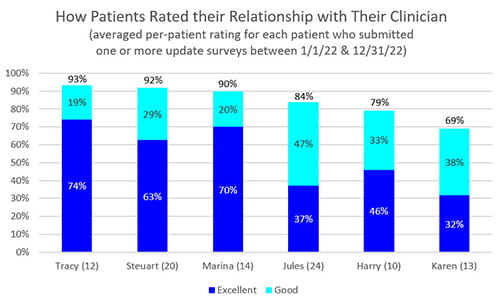
The Supplemental Clinician Effectiveness Report includes three charts showing key during-treatment metrics for all of your clinicians. The first averages the therapeutic alliance ratings each patient gave to their therapist on the update surveys they submitted:
The second chart summarizes how helpful the patients said their therapy sessions were in meeting their treatment goals. The third chart compares the percentage of each therapist’s patients who successfully completed all recommended treatment versus left against medical advice. I’m often shocked by the substantial differences this graph identifies:

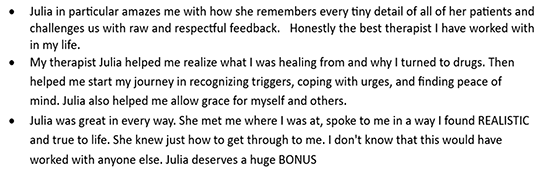
The report also contains comments from the patients explaining why they rated their therapist the way they did:
Vista also publishes a supplemental report containing feedback patients gave about their clinicians when they were reached after treatment.
Supplemental Post-Treatment Outcomes Clinician Report
Vista’s post-treatment outcomes report summarizes how patients reached six months after treatment felt about the quality of the relationship they had had with their primary therapist:

The report also showcases the clinicians whose patients are reachable and meeting their drug and alcohol usage goals six months after treatment:

When treatment centers begin listening systematically to what their patients are saying, they often discover insights they never expected. The clinicians patients connect with most deeply aren’t always the ones leadership would have guessed, but they are typically the ones whose patients make the greatest progress.
Seeing these differences clearly gives treatment centers something incredibly valuable: the ability to learn from their most effective clinicians and strengthen the entire clinical team.
If you’re interested in hearing what Turning Point Centers has learned building a data-driven culture over the last seven years, I hope you’ll join us for Thursday’s forum.
And if you’d like to learn more about how Vista’s progress monitoring and outcomes research can help you better understand what’s happening inside your own program, including identifying the clinicians whose patients are achieving the strongest outcomes, please schedule a discovery call with our team.