

One patient hears voices. Another insists the government is trying to control her actions. A third believes he has superpowers and that sleep is optional. There have always been patients with a weak grip on reality, but their numbers are increasing.
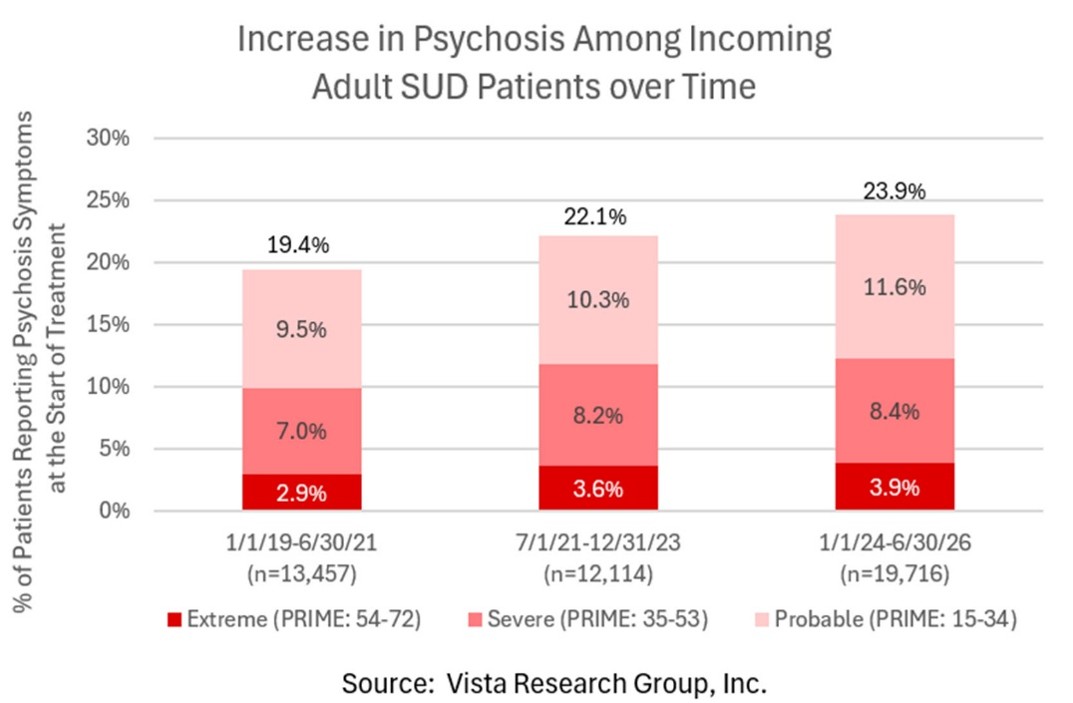
Vista’s research shows that the percentage of adult SUD patients entering treatment with probable psychosis increased from 19.4% to 23.9% since 2019:
How Common is Drug-Induced Psychosis?
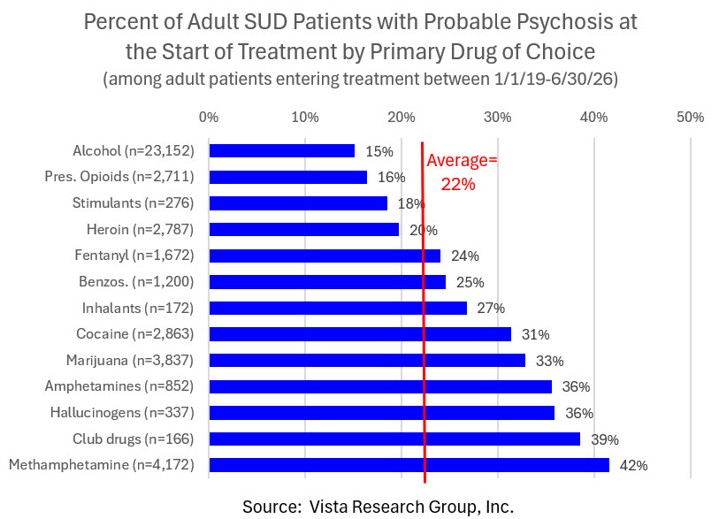
Over the last 7.5 years, 22% of incoming adult SUD patients reported symptoms of probable psychosis according to Yale’s PRIME Screen Revised assessment. The incidence of psychosis varied a great deal by primary drug of choice, indicating that the drugs the patient abused prior to treatment contributed substantially to their psychosis.
Only 15% of patients entering treatment for alcohol use disorder met the criteria for having probable psychosis. By comparison, between 31% and 36% of patients who preferred cocaine, marijuana, amphetamines or hallucinogens did so. And the incidence of psychosis was particularly high for patients whose primary drug of choice was club drugs (39%) or methamphetamine (42%):
How Does Psychosis Impact Treatment?
Not surprisingly patients entering treatment with psychosis are substantially less likely to successfully complete treatment:
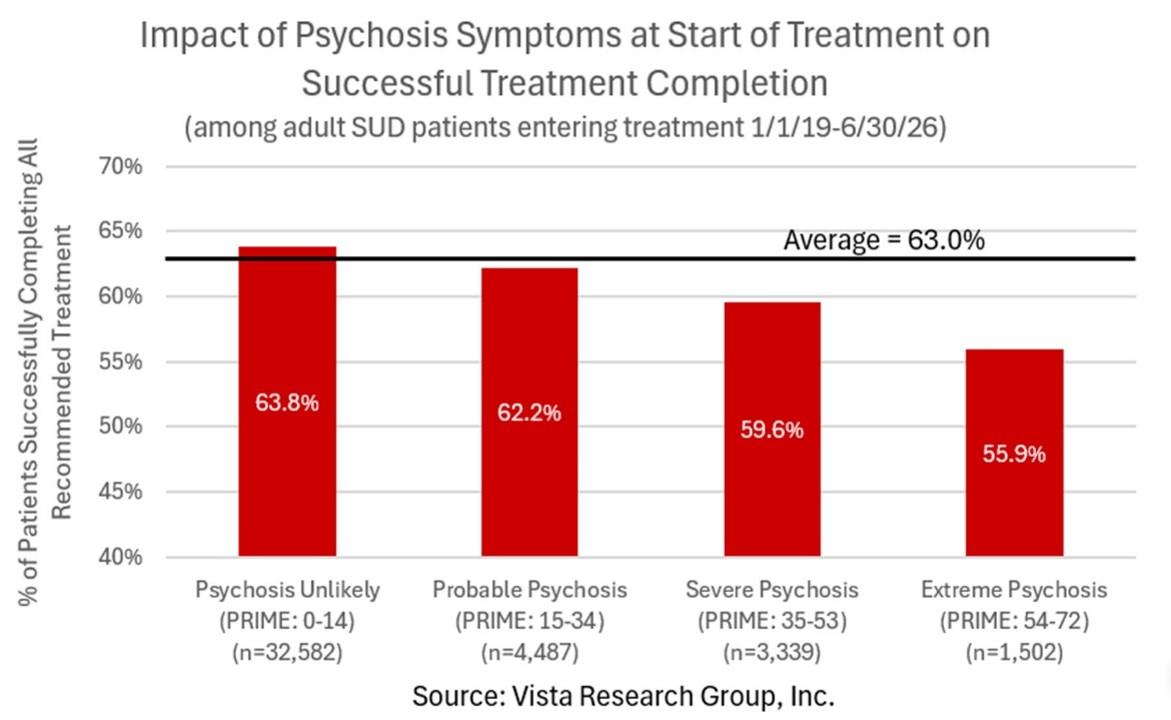
Not only are these patients more likely to leave against medical advice (15.7%), but they’re also frequently referred to a higher level of care (4.7%) or asked to leave (5.3%).
How Quickly Do Psychosis Symptoms Go Away?
Patients’ psychosis symptoms resolved themselves within two weeks of entering treatment for more than half (57%) of the adult SUD patients:
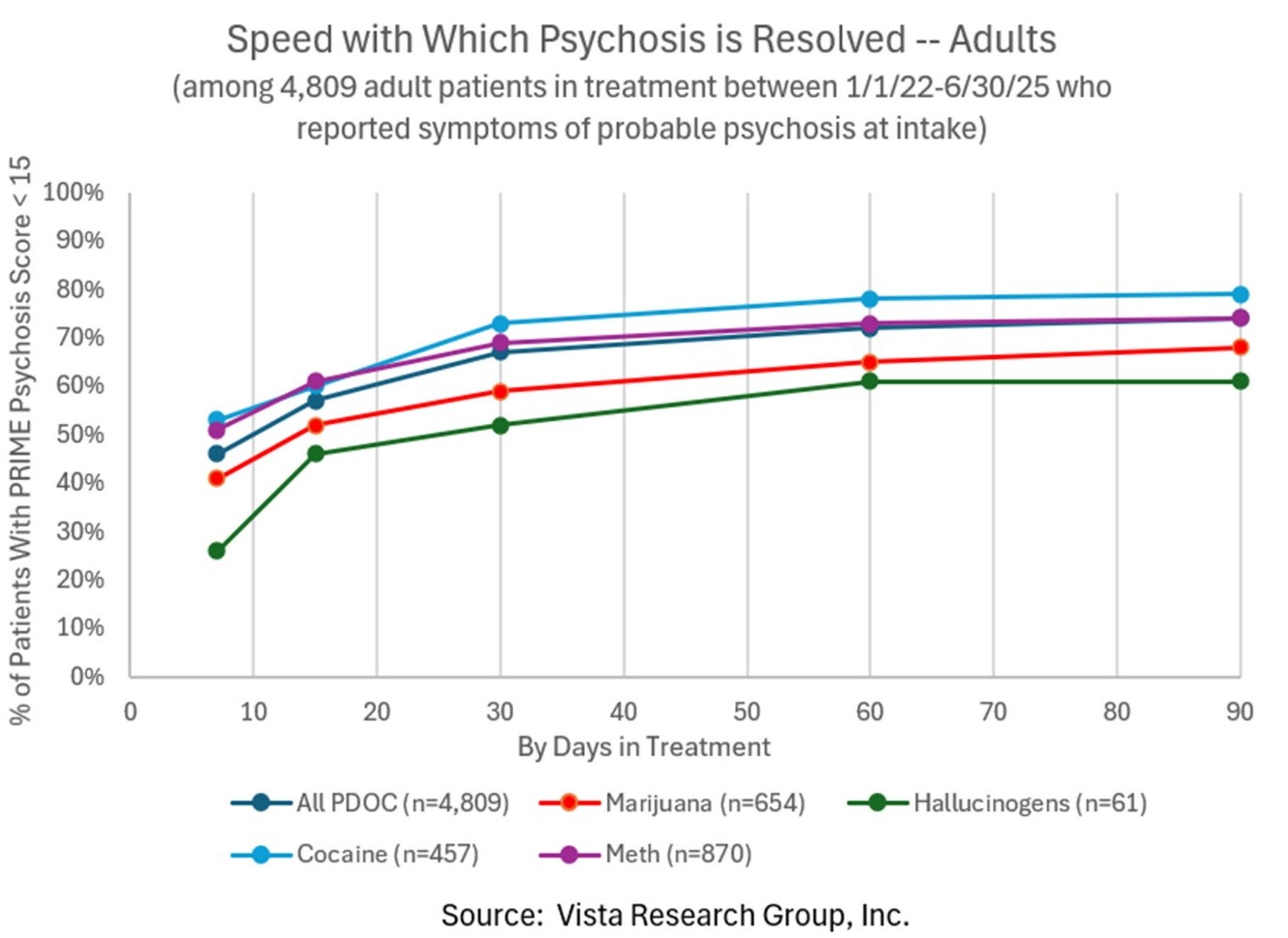
However, there is a substantial group of patients whose psychosis symptoms do not quickly resolve. As the following chart shows, 26% of adult SUD patients were still showing signs of probable to severe psychosis on their last survey before leaving treatment — or, for those in long-term treatment, 90 days after they entered:
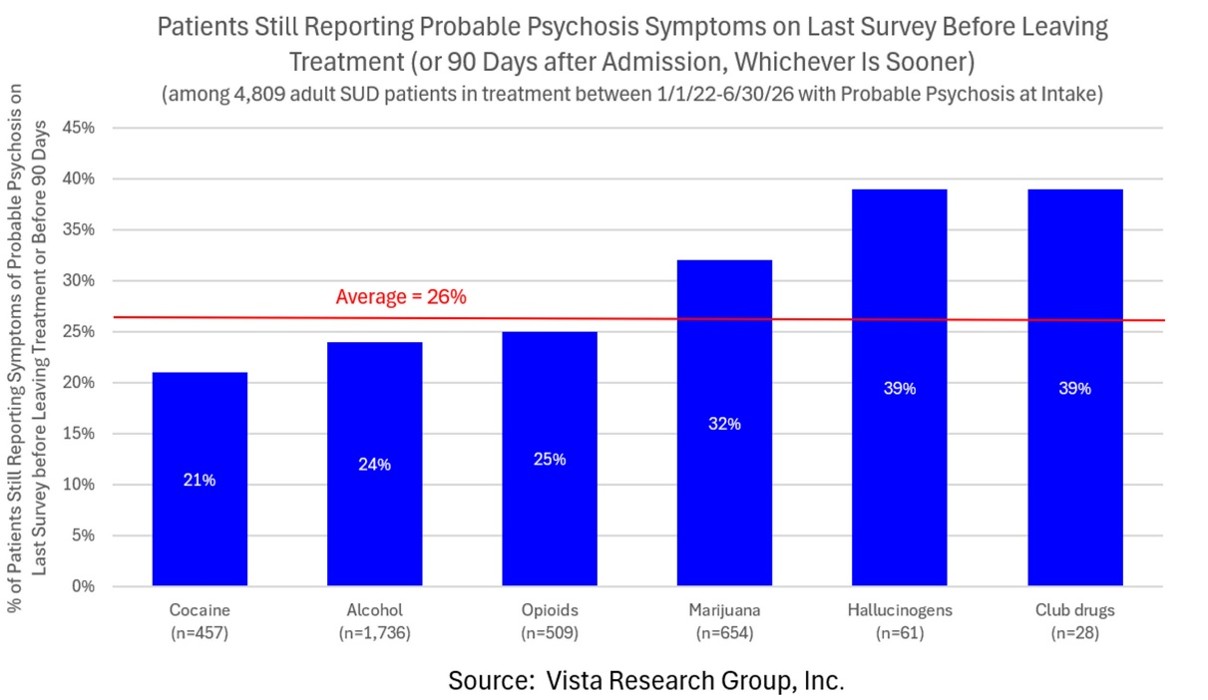
Unresolved psychosis is particularly common among adults whose primary drug of choice is marijuana, hallucinogens or club drugs.
Psychosis is Even More of a Problem For Adolescents
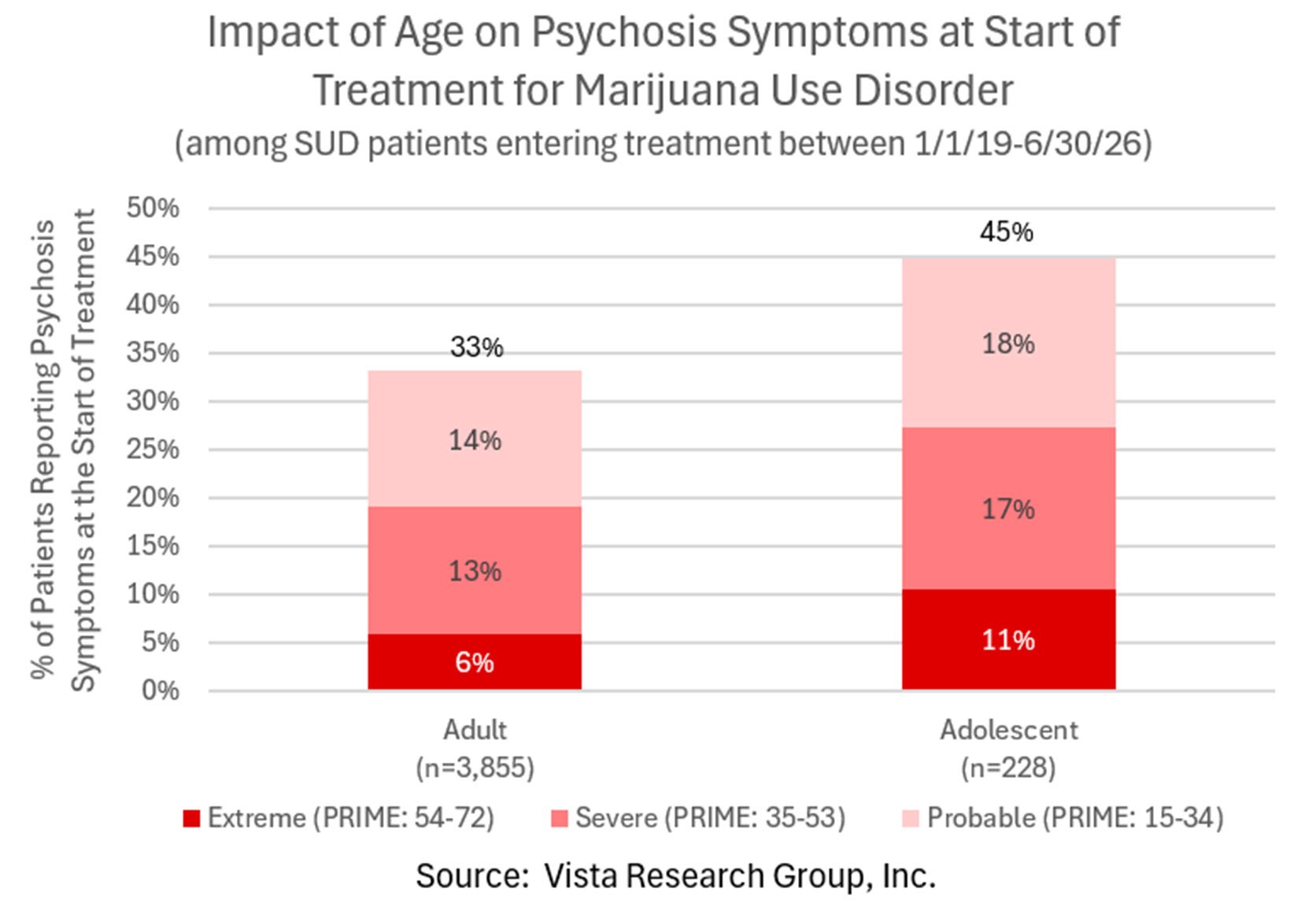
Not surprisingly, adolescents are more prone to developing psychosis than adults. While 33% of adults entering treatment for marijuana use disorder report symptoms of probable psychosis, 45% of adolescents do:
Adolescents' psychosis symptoms are also more difficult to resolve. Among adolescents, only 24% see their symptoms resolve within two weeks of entering treatment — far below the 57% resolution rate for adults:
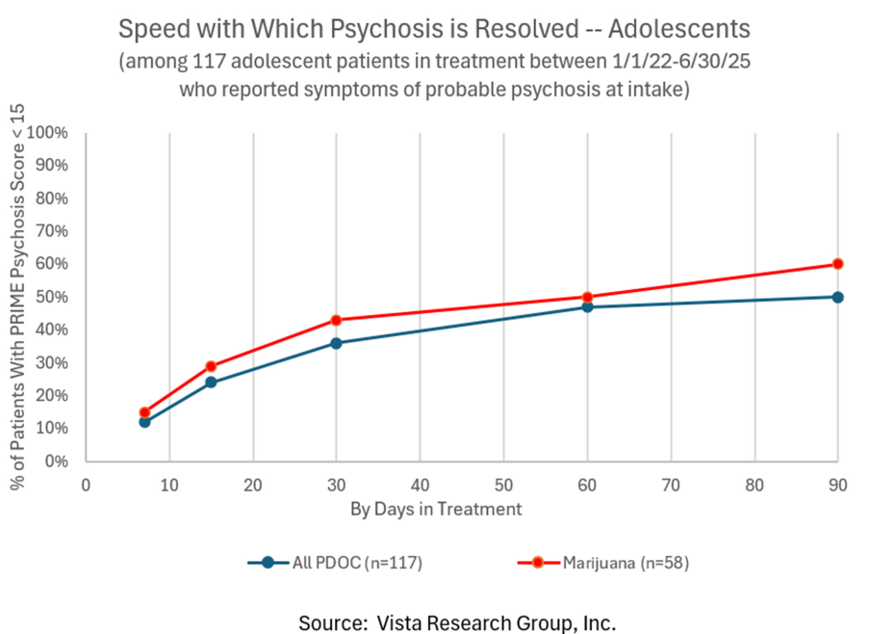
And even though the adolescents in Vista’s research had a median length of stay of 53 days compared to 28 days for the adults, a higher percentage of adolescents left treatment with unresolved psychosis symptoms.
Many Individuals with Drug-Induced Psychosis Will Develop Schizophrenia
What is particularly worrisome about the high incidence of drug-induced psychosis among adolescents and young adults is that this episode may be the harbinger of future serious mental health issues. A recently-published retrospective study of 407,737 people in Ontario who were treated for a substance use-related issue in the emergency department between 2008 and 2022 had very disturbing findings. Over 40% of males between the ages of 14 and 24 who were seen in the ED for cannabis-induced psychosis developed schizophrenia within the following three years!
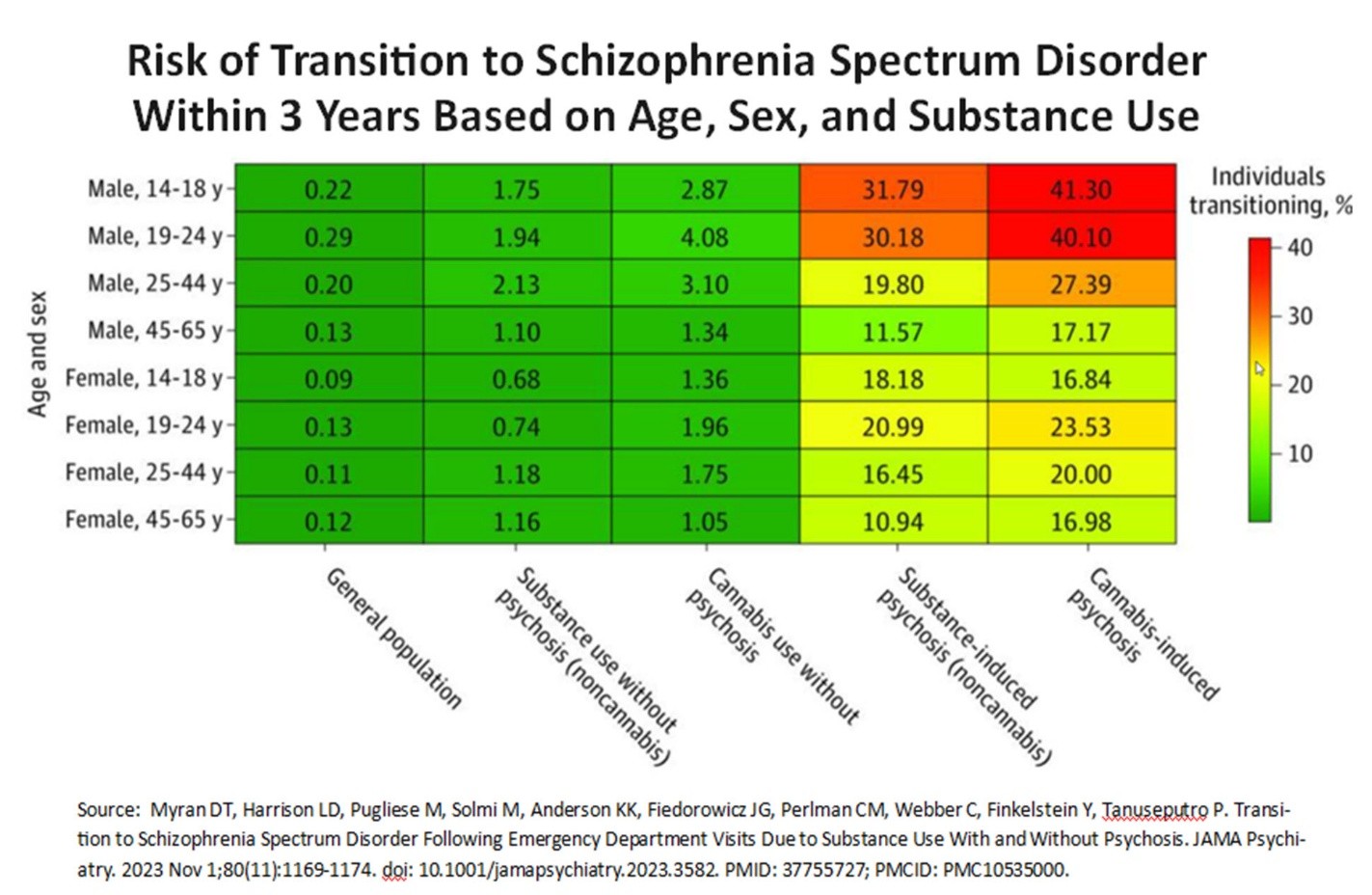
Among all ages and genders, those who were seen in the ED for a cannabis-induced psychotic episode had 163 times the risk of developing schizophrenia within the following three years as the general population.
What This Means for Treatment Providers
These numbers point to a simple conclusion: psychosis in SUD patients isn't just a symptom to manage. It's a warning sign that deserves a multi-pronged approach.
First, treatment centers need to screen for psychosis at intake and shape treatment planning around its presence. Where possible, these patients should be assigned to clinicians with experience successfully treating drug-induced psychosis. If symptoms don't quickly resolve, antipsychotic medication should be considered. And because these patients are more likely to leave against medical advice or be discharged early, guardrails should be put in place to help them stay in treatment.
Second, patients who leave treatment with active psychosis symptoms should be referred to a psychiatrist and their first appointment scheduled before they walk out the door.
Finally, please be honest with families about what’s at stake. A meaningful share of patients with drug-induced psychosis will go on to develop schizophrenia or another serious mental illness, sometimes years after the substance use itself is long resolved. A parent or family member who understands this risk will take confusion, paranoia, or other warning signs seriously and can act quickly if necessary in the future.
Joanna