
Because gambling and drugs trigger the same reward response in the brain, a surprisingly high percentage of SUD patients are also struggling with a gambling disorder. If your team isn’t identifying and effectively treating their gambling addiction, these patients are more likely to leave AMA and/or to relapse after treatment.
The Prevalence of Gambling Disorder
The National Council on Problem Gambling estimates that 1% of adult Americans have a serious gambling problem. Not surprisingly, the incidence of gambling addiction is much higher among patients in SUD or mental health treatment, particularly among males.
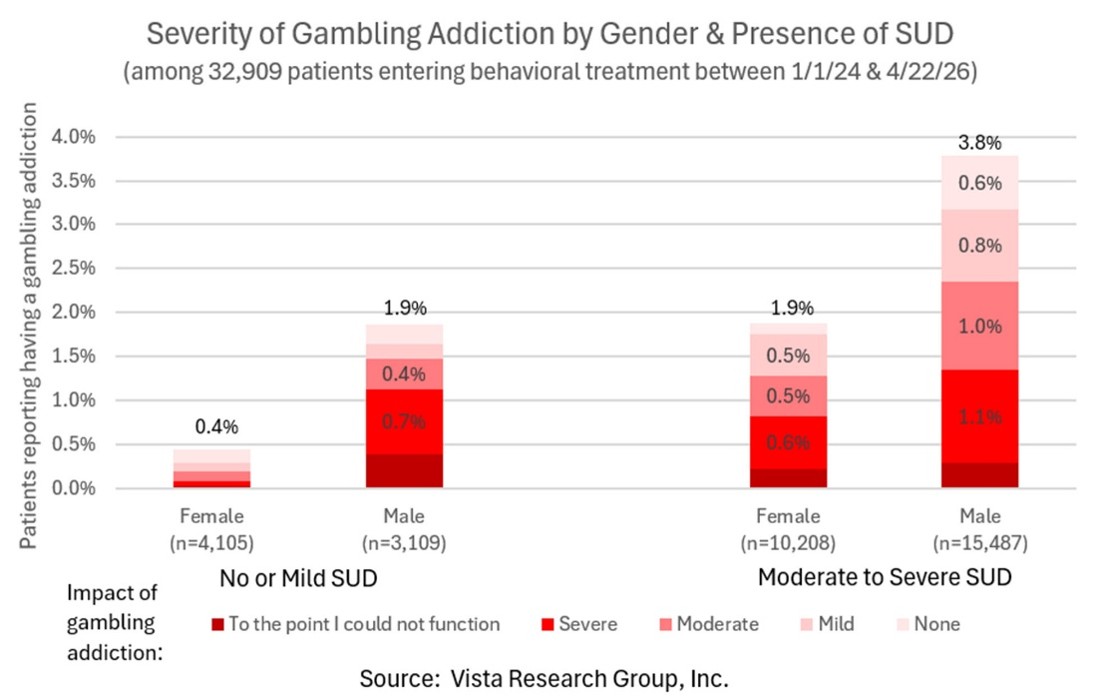
Over the last two years, 3.5% of the males and 1.5% of the females who entered treatment in the Vista Research Network reported having a gambling addiction. See prevalence by age. Males who had a moderate to severe substance use disorder were twice as likely to be struggling with gambling disorder as males who didn’t. Among females, those with SUD had quadruple the rate of gambling disorder as those who didn't:
This correlation is not surprising because both substance use and gambling hijack the dopamine reward system similarly. The nucleus accumbens, the region of the brain that drives craving, anticipation and compulsive behavior, responds to a winning bet the same way it responds to a hit of cocaine.
In fact, gambling disorder is the only non-substance-related condition that is classified in the DSM-5’s newly-expanded “Substance-related and Addictive Disorders” category. Prior to the 5th edition, gambling disorder was classified as an impulse control disorder.
Gambling Disorder Makes It Harder to Recover from SUD
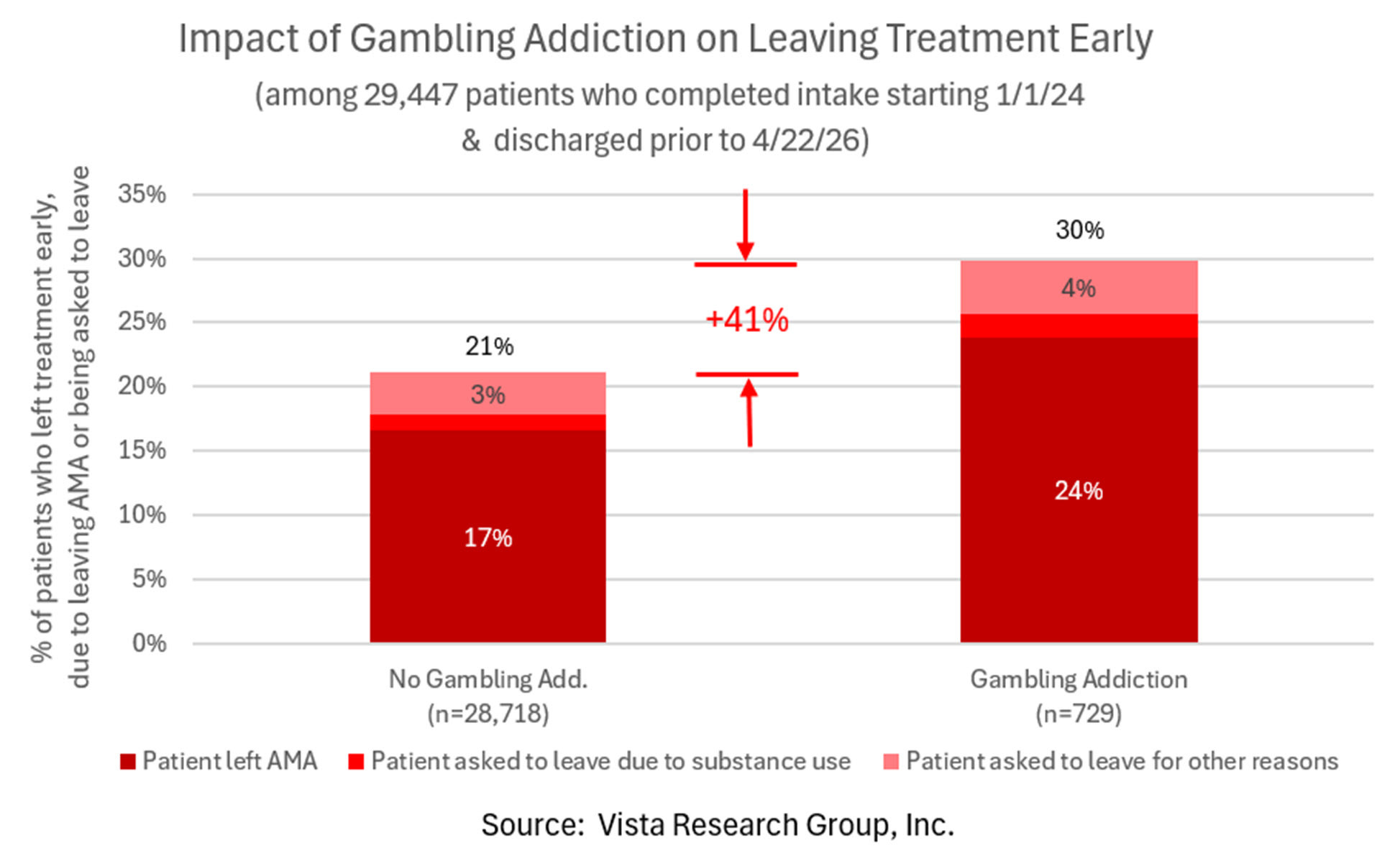
Patients with a gambling addiction are 41% more likely to leave treatment early compared to those who don’t have one. In addition to being far more likely to leave against medical advice, they are also more likely to be asked to leave by the treatment center:
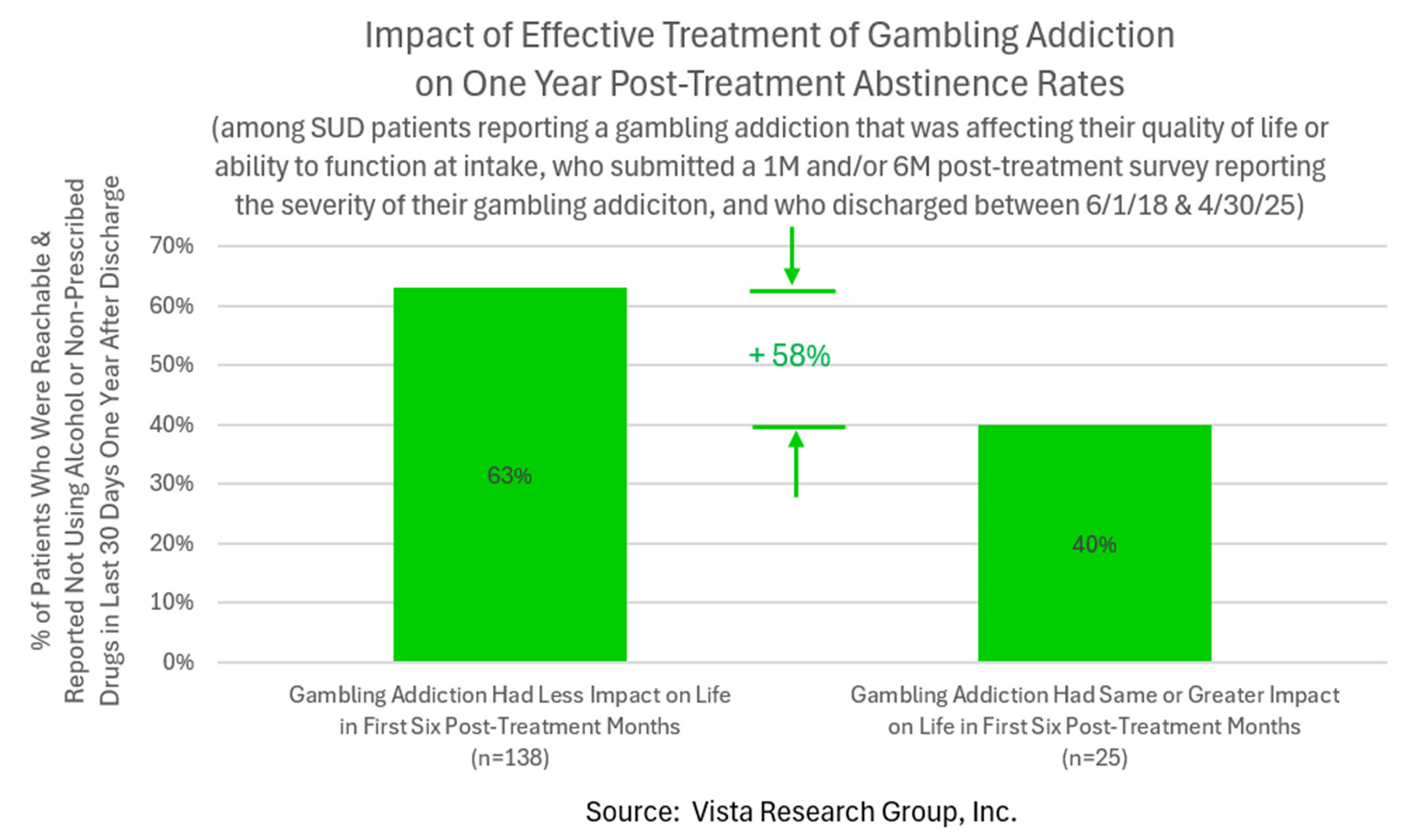
Effectively treating an SUD patient’s gambling addiction is crucial to their ability to recover from their substance use disorder. We compared how severely patients said their gambling addiction was affecting their quality of life at the start of treatment and on their one- and/or six-month post-treatment surveys. Patients who reported that their gambling disorder had improved during this time were 58% more likely to be reachable and abstinent one year after treatment than those whose gambling disorder had worsened or stayed the same:
Treating Gambling Disorder Effectively
Motivational interviewing and CBT are effective tools for treating gambling disorder. However, like most other comorbidities, it’s important that the presence of a gambling addiction be identified so it can be effectively treated. Without a specific screening mechanism, it’s easy for a gambling addiction as well as other conditions like an eating disorder to go unreported. Are you confident you’re accurately identifying all of the issues your patients need treatment for?
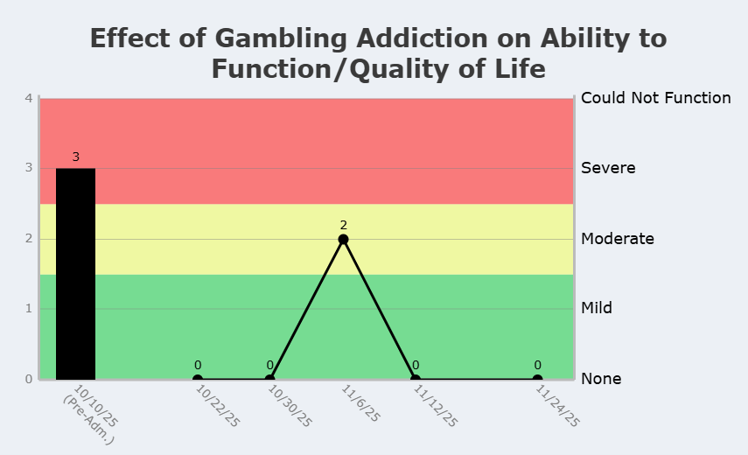
Vista’s outcomes research makes this easy. In addition to being screened for common behavioral disorders, patients are asked about a variety of other conditions that may have affected their need for treatment such as gambling, sex and shopping addictions, ADHD, Personality Disorder and Obsessive Compulsive Disorder (OCD). When a patient reports having any of these issues, they are asked the impact this condition had on their quality of life and ability to function normally in the 30 days prior to treatment. This information is immediately summarized for his or her clinician on the patient’s Intake Summary:

Additionally, Vista tracks how severely the patient feels their gambling addiction is affecting them throughout the time they're in treatment:
Gambling disorder doesn't announce itself.
Your patients have to be asked.
If your intake process doesn't specifically screen for it, you're likely missing patients whose gambling addiction significantly reduces their likelihood of recovering from SUD and other disorders. Vista's outcomes research informs your clinicians about this issue so they can effectively treat it.
Want to ensure your patients have the best shot at fully recovering? Let's set up a discovery call.